
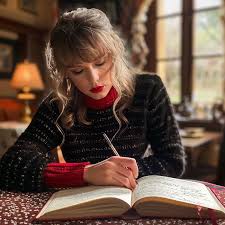
Celebrities love to remind us that underneath the fame, the stadium tours, and the armies of fans ready to decode every blink and breath, they’re really just people with oddly specific hobbies and comfort routines. And in Taylor Swift’s case, one of those very human pleasures is curling up with an audiobook so moody, twisty, and atmospheric it might as well come with a fog machine and a warning label. During a recent appearance on “The Late Show with Stephen Colbert,” Swift casually revealed that she is, in fact, an audiobook superfan—specifically the kind of listener who wants old mansions, mysterious family secrets, unreliable narrators, and a hint of ghostly menace baked right into the plot.
For someone who has spent nearly two decades writing songs drenched in imagery, character-building, and emotional storytelling, Swift’s love of Gothic-inspired mystery fiction feels almost inevitable. While chatting with Colbert, she explained that she listens to audiobooks “constantly” in her personal time. And not just any books—her tastes zero in on domestic thrillers steeped in fog, suspicion, and complicated relationships. Think Daphne du Maurier’s “Rebecca,” a 1938 Gothic masterpiece about a haunted estate, a brooding husband, and a wife losing her grip on what’s real. It’s no coincidence that “Rebecca” famously inspired Swift’s song “Tolerate It” from “Evermore,” which means her literary interests aren’t just casual—they’re woven into her creative DNA.
But what sent the internet spiraling, as it always does when Taylor Swift breathes too interestingly, was not just the admission that she loves audiobooks. It was how she described her ideal plot. Swift didn’t throw out a general preference like “mystery” or “thrillers.” No. She described a specific, highly cinematic checklist, like someone sketching out the mood board for her next album cycle. According to Swift, the perfect audiobook involves an old, rambling British mansion draped in ivy, a questionable romance with a man who may be hiding something terrible, whispers of a murder that happened long ago, and a possible ghost. If that weren’t enough, she extended her vision to American shores: a secluded family compound off the coast of Maine, siblings with dark secrets, strange absences, and a creepy, crumbling estate where marriages rot from the inside out. And then, in classic Taylor fashion, she threw in an unreliable narrator twist that flips the sympathy we’ve built for the protagonist on its head.
Colbert, ever the good-natured accomplice, laughed as she continued building out this hypothetical thriller novel. But for Swifties, this was not just some cute anecdotal riffing—this was a breadcrumb trail. A puzzle. A cipher begging to be solved. Because if there is one thing the fandom has made a sport out of, it’s treating every offhand Swift comment as potential foreshadowing for an album, a vault track, or a project no one even knew existed. And her description was just specific enough, just literary enough, and just dramatic enough that fans immediately launched into speculation mode: is Taylor Swift writing a book?
Her detailed list of tropes certainly reads like something she’s spent time thinking about. The ivy crawling up decaying stone walls? That echoes her “Evermore” track “ivy.” The murder references? Straight out of “No Body No Crime.” The red dress and lipstick she wore that night? Fans connected it to her “Red” era, specifically the extended “All Too Well” short film, which depicts Swift as an author publishing her own memories. Even the idea of a mysterious island estate aligns with the folklore-inspired landscapes she’s been crafting in her writing for years.
Swift has never been shy about her love for stories that feel larger than life, and it’s possible that the imagination she brings to her albums is simply spilling over into her reading preferences. But the way she lit up while describing the plots—like she had imagined these characters or settings long before the interview—was enough to fuel theories within hours. Social media immediately flooded with fans rewatching clips, pointing out symbolic lines, and connecting references to her past albums. Some insisted she was hinting at a novel; others thought she might be teasing a film or series adaptation she could be involved in. A few theorized that she might not write a book herself but could be preparing to executive-produce a story in this style, the same way she has taken on directing and screenwriting roles in recent years.
But setting aside the speculation, there’s something genuinely charming about Swift’s enthusiasm for audiobooks. While many celebrities use late-night interviews as a chance to plug projects, dodge controversies, or deliver polished anecdotes, Swift seemed genuinely excited about this niche passion of hers. And she’s far from the only one diving into the audiobook world. Spotify Wrapped data revealed that half of all Premium users listened to an audiobook in the past year. Sales across the industry surged by 13%, reaching $2.2 million according to an Audio Publishers Association Sales survey. Audiobooks are no longer just a convenient alternative to reading—they’ve become a mainstay of modern entertainment.
And the genre Swift gravitates toward—dark domestic suspense—has exploded in popularity. Titles like “Gone Girl” by Gillian Flynn, “The Silent Patient” by Alex Michaelides, and “None of This is True” by Lisa Jewell dominate charts and BookTok feeds. These stories tap into anxieties about marriage, identity, and trust in a way that feels both thrilling and oddly relatable. They’re built for binge-listening, and for someone like Swift, who has spent her life navigating narratives—some true, many wildly untrue—crafted about her by others, it makes sense she’d be drawn to stories that unravel the truth in dramatic, gut-punching fashion.

Her brief list of recommendations, offered indirectly through vibe alone, reads like a who’s-who of current psychological fiction. The suggestion of “The Housemaid” by Freida McFadden comes with its own domestic claustrophobia. “Beautiful Ugly” by Alice Feeney taps into fractured identities and buried secrets. “The Paris Apartment” by Lucy Foley takes the locked-room mystery and injects it with modern noir glam. And “Big Little Lies” by Liane Moriarty, with its messy relationships and hidden histories, practically screams the kind of emotional unraveling Swift loves referencing in her songwriting.
Swift’s ability to paint vivid emotional landscapes is one of the reasons her fans connect with her so deeply. But it’s also why the idea of her writing a book doesn’t feel far-fetched at all. Whether it’s a memoir, a novel, or a hybrid storytelling project that blends her music with narrative fiction, Swift has always been drawn toward worlds where emotions and secrets collide. Her discography is already filled with stories that could easily translate into pages—“The Last Great American Dynasty,” “Champagne Problems,” “Betty,” “Cardigan,” “The Archer,” and countless others. Her songs often read like chapters from unwritten books.
And then there’s her offhand comment to Colbert about his next career move after “The Late Show” ends. With a mischievous glint, she pitched him a full-blown thriller premise complete with ghostly apparitions, secret relatives, and someone falling off a cliff—only to reveal they might be a ghost. She joked that the family on this fictional island doesn’t even own the island. It was layered, chaotic, and strangely compelling—the kind of story someone might accidentally pitch because they’ve already been thinking about it more seriously than they let on.
Colbert played along, pulling out a pen and pretending to write notes as she spun the increasingly gothic tale. But the moment felt symbolic: Swift holding the pen metaphorically, Colbert holding it literally. Because if anyone is going to snatch up intellectual property like this, it’s likely going to be Swift—the woman who re-recorded her own albums to reclaim ownership over her art and who has shown, time and time again, that she is a master of long-form storytelling.
While fans wait (impatiently, obsessively, and with typical Swiftian dedication) to see whether a book announcement eventually materializes, the truth might be simpler. Swift just genuinely loves stories. She loves narratives tangled in vines and shadows, marriages collapsing under the weight of secrets, families haunted by their pasts, and women who discover they are more powerful than anyone expected—even when they’re a little unhinged.
Her enthusiasm is a reminder that even the most famous person in the world can find comfort in a story someone else reads aloud. It’s deeply human, in the same way her love of baking, cats, and late-night scrolling is. And maybe that’s why this interview resonated so much: Swift wasn’t promoting anything. She wasn’t launching a new era. She wasn’t even trying. She was just talking about a thing she loves in a way that made fans feel like they were curled up next to her, swapping book recommendations in a quiet living room on a rainy day.
Whether she ends up writing her own twist-filled novel or simply keeps devouring them in audiobook form, the picture she painted on Colbert’s couch was vivid enough to capture the public imagination. An ivy-covered mansion. A ghost that might not be a ghost. A husband who isn’t who he claims to be. A woman unraveling or awakening—depending on the chapter. And an island that holds more secrets than shoreline.
Somewhere out there, a story like this already exists. But if Taylor Swift ever decides to tell her own version, one thing is certain: the world will be ready to listen.