

Nick Reiner’s life has long been shaped by extremes — privilege and pain, opportunity and isolation, connection and rupture. Long before his name became linked to shocking headlines, his story was already marked by a quiet, grinding battle with addiction that began in his teens and stretched well into adulthood. That struggle did more than derail his personal life; it ultimately became the unlikely bridge that connected him to his father, legendary filmmaker Rob Reiner, in a way neither of them could have anticipated.
In 2015, that connection took artistic form with the release of Being Charlie, a deeply personal film cowritten by Nick and directed by Rob. On the surface, the movie told the story of Charlie Mills, a troubled teenager from a wealthy background who cycles in and out of rehab while grappling with substance abuse, emotional detachment, and a persistent refusal to confront his pain. Beneath the surface, however, the film was rooted in lived experience. Nick’s own history with addiction — including repeated stays in rehab and a period of homelessness — shaped the emotional core of the story.
Nick had entered rehab for the first time at just 15 years old, an age when most teenagers are worrying about school, friendships, and finding their place in the world. Instead, his life became defined by treatment centers, relapses, and the growing frustration of adults who desperately wanted to save him. Over the years, he would return to rehab 17 times. Each visit carried the promise of recovery and the weight of expectation, followed too often by disappointment when sobriety didn’t last.
Eventually, his refusal to return to rehab led to a breaking point. Nick found himself homeless, cut off not just from stability but from the safety net that had always existed around him. It was a stark and humbling chapter, one that stripped away any illusion that addiction could be managed through willpower or family resources alone. For his parents, Rob Reiner and Michele Singer, it was an unbearable position to witness — loving a child who seemed determined to self-destruct, while every attempt to help appeared to push him further away.
Rob Reiner, celebrated publicly for decades of cinematic success, was privately wrestling with a problem no award or acclaim could solve. He later spoke openly about the emotional turmoil of parenting a child with addiction, particularly the tension between compassion and what professionals often label “tough love.” That approach never came naturally to him, yet he adopted it out of fear that anything else might enable destructive behavior. Like many parents in similar situations, he was caught between instinct and instruction, love and boundaries, hope and exhaustion.
When the idea for Being Charlie emerged, it was not simply a creative project. It was an act of mutual vulnerability. Writing and directing the film forced both father and son to confront versions of the past they had never fully processed together. Rob has said that working on the movie required him to look more honestly at how Nick’s addiction had affected him as a father — how fear, guilt, and the pressure to “do the right thing” sometimes led him to override his own instincts.
He acknowledged that, in hindsight, he might have trusted himself more. He knew his child better than any expert, yet he deferred to clinical rules and rigid frameworks because he was terrified of making the wrong choice. Through the filmmaking process, Rob came to understand that addiction is rarely about rebellion or moral failure. More often, it is an attempt at self-medication, a way to numb unresolved pain that has no clear outlet.
Nick, meanwhile, experienced his own reckoning. Writing the screenplay required a level of honesty that addiction actively resists. It meant revisiting moments of shame, denial, anger, and loss — not just for the sake of confession, but to translate them into something meaningful. It also meant seeing his father in a new light. Growing up, Nick had struggled to connect with Rob, not because of a lack of love, but because addiction had warped perception and fueled resentment.
During the making of Being Charlie, Nick saw his father operating in the space where he was most fluent: storytelling. Watching Rob work on set, guide actors, shape scenes, and translate emotional complexity into narrative helped Nick understand him beyond the role of a worried parent. He saw experience, discipline, and care — qualities that had been easy to dismiss during years clouded by substance use. That realization shifted something fundamental. Nick later said that the process helped him recognize that his father knew more than he had ever been willing to admit, and that listening rather than resisting might be its own form of growth.
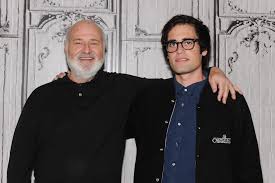
The film reflected that dual perspective. Charlie Mills is not portrayed as a villain or a hero, but as a young man trapped in a cycle he barely understands. His parents are neither saints nor tyrants. They are flawed, frightened, and deeply human — trying to protect their child while confronting the reality that love alone cannot cure addiction. That balance gave the movie its emotional authenticity and made it resonate with audiences who recognized the messy truth of family dynamics under strain.
For a time, Being Charlie represented something hopeful: proof that pain could be transformed into connection, that shared understanding could emerge from years of conflict. Rob has said that the experience brought him and Nick closer, forcing both of them to see each other more clearly and more compassionately. It was a rare example of art not just reflecting life, but actively reshaping it.
That context makes the events of December 14 all the more devastating. A decade after the film’s release, authorities found Rob Reiner and Michele Singer dead in their Brentwood home. Rob was 78, while Singer was reportedly 70. The news sent shockwaves through both Hollywood and the public, not only because of Rob Reiner’s cultural legacy, but because of the deeply personal history the family had already shared so openly.
Nick Reiner was taken into custody that same day. Los Angeles Police Department Chief Jim McDonnell later confirmed during a press conference that Nick had been arrested and booked on suspicion of murder. He is currently being held without bail after an initial bail amount of $4 million was set. As with any ongoing investigation, the legal process will determine the facts, and no conclusions should be drawn beyond what authorities have formally stated.
Still, the tragedy casts a heavy shadow over the family’s story. For those who remember Being Charlie, the news feels especially jarring. The film was about survival, reconciliation, and the hope that understanding could emerge from chaos. It showed a father and son finding common ground after years of distance, using creativity as a bridge across pain that once seemed insurmountable.
Rob Reiner had long spoken about his belief that addiction is rooted in unaddressed emotional wounds. Whether the behavior involves substances, gambling, sex, or other compulsions, he believed it was often a way to soothe inner pain that felt otherwise unbearable. That philosophy guided how he spoke to his children and how he approached the subject publicly. He emphasized understanding over judgment, curiosity over condemnation.
In retrospect, those words carry an added weight. Addiction is rarely a straight line from suffering to healing. It is often cyclical, unpredictable, and deeply isolating — not just for the person struggling, but for everyone who loves them. Even moments of connection, growth, and apparent stability do not erase the underlying complexity.
The story of Nick and Rob Reiner was never a simple redemption arc. It was a story of effort, love, mistakes, learning, and fragile progress. Being Charlie captured one chapter of that journey, offering a glimpse into what happens when a family chooses honesty over silence. The current circumstances do not erase that chapter, but they do complicate it in ways that are painful to confront.
As the legal process unfolds, what remains undeniable is the depth of emotion that defined this family’s history. Behind the headlines are years of trying, failing, forgiving, and trying again. There is the image of a father who questioned his own choices, a son who fought demons that refused to be neatly resolved, and a shared belief that storytelling could illuminate what words alone could not.
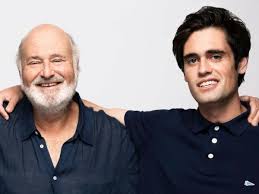
In the end, the legacy of Being Charlie may rest less in its box office performance or critical reception, and more in what it represented at the time it was made: an attempt to understand, to listen, and to bridge a gap that addiction had carved too wide. That attempt, however imperfect, remains a testament to the complicated, painful, and deeply human reality of loving someone who is struggling — and to the belief that even in darkness, connection is worth reaching for.