
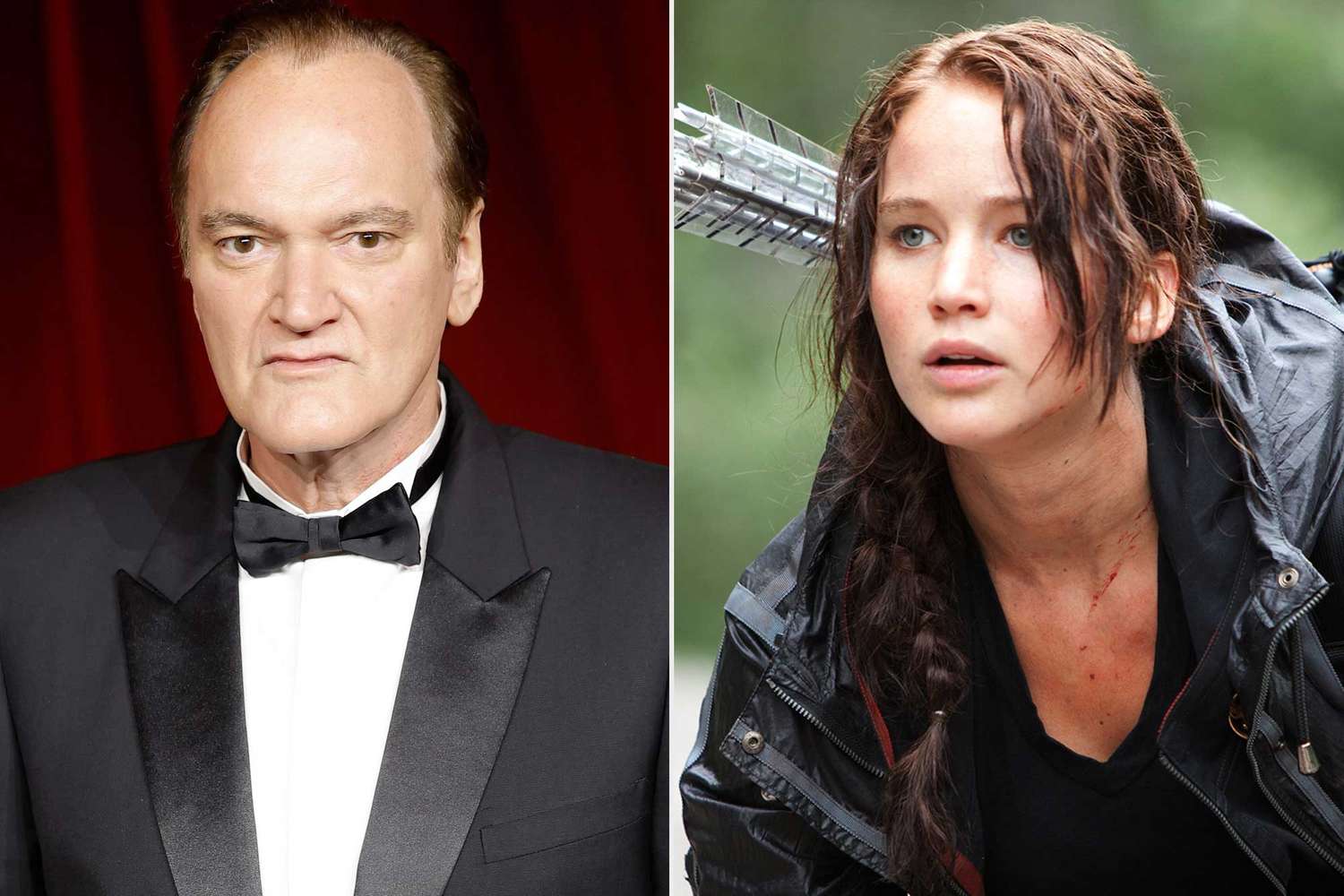
Quentin Tarantino has never been the kind of filmmaker who slips quietly into a conversation. He enters loudly, says exactly what he means, and leaves a crater of debate behind him. His recent appearance on “The Bret Easton Ellis Podcast” added another chapter to his long history of blunt cultural commentary, this time targeting one of the most influential young adult franchises of the last two decades. Tarantino did not pull a single punch when discussing The Hunger Games, accusing author Suzanne Collins of borrowing too heavily—if not outright copying—from Koushun Takami’s 1999 novel Battle Royale. And because Tarantino has long praised the Japanese novel’s film adaptation as one of his all-time favorites, his criticism wasn’t casual. It was personal, specific, and delivered with the kind of intensity that only he can summon.
According to Tarantino, the similarities between The Hunger Games and Battle Royale are simply too significant to ignore. On the podcast, he expressed frustration not only with Collins but also with the literary world at large for what he sees as a cultural blind spot. He argued that if book critics had expanded their horizons beyond Western offerings, they would’ve immediately recognized the parallels. As he put it, book reviewers were unlikely to watch a foreign film like Battle Royale, or to be familiar with Takami’s novel, which gave Collins a free pass. His language may have been explosive, but his underlying message was clear: he believes Takami’s work laid the groundwork that made The Hunger Games possible, and he’s baffled that so few people have publicly acknowledged it.
The filmmaker’s frustrations didn’t stop there. Tarantino highlighted a divide between literary critics and film critics in how they approached Collins’ work. While book reviewers hailed the trilogy as groundbreaking and deeply original, film critics—many of whom were familiar with Takami’s iconic story—were far quicker to note the similarities once the movies hit theaters. To Tarantino, the difference in reception was not only glaring but revealing. It exposed how cultural gaps can shape which works are canonized and which are overlooked, and it demonstrated how Western audiences often label something “original” simply because they haven’t encountered the global stories that preceded it. For Tarantino, this wasn’t just about one franchise—it was about a broader pattern in pop culture.
Collins, for her part, has denied that Takami’s novel had anything to do with her own work. She told The New York Times back in 2011 that she had never heard of Battle Royale until after she had submitted her book. Her editor, she said, even advised her not to read it afterward, insisting that consuming a story with overlapping themes could distract her or influence her future writing. It’s a reasonable explanation, and many authors have defended her over the years. After all, dystopian narratives featuring violent competitions or oppressive regimes aren’t unique to either series. They all draw from a long line of cautionary tales, from The Lottery to 1984 to Lord of the Flies. Yet Tarantino clearly doesn’t buy that explanation, and his disbelief has reignited an old debate about artistic inspiration, originality, and how much overlap is too much.
Regardless of where one stands on the issue, there’s no denying that The Hunger Games grew into a cultural phenomenon that far surpassed its literary roots. The books became a gateway into dystopian fiction for millions of young readers. They shaped cosplay culture, birthed countless fan theories, and even influenced the games kids played in their backyards and the woods. When the film adaptations arrived, Jennifer Lawrence’s portrayal of Katniss Everdeen propelled the franchise into global superstardom. The movies became box-office juggernauts: the first two films each brought in more than $400 million domestically, a feat few franchises ever achieve. They created fashion trends, inspired political metaphors, and cemented the phrase “May the odds be ever in your favor” in pop culture history.
And the momentum of the series shows no sign of slowing. Nearly two decades after the original book debuted, a sixth film is on its way. Sunrise on the Reaping, an adaptation of Collins’ prequel centered on Haymitch Abernathy, is slated for release in November 2026. The story unfolds 24 years before Katniss ever stepped into the reaping bowl, during the 50th Hunger Games—one of the Quarter Quells designed to be even more brutal and spectacular than the others. Fans already know Haymitch as the sardonic, damaged mentor who guides Katniss and Peeta through the games, but this new installment promises to peel back his layers and show the trauma that shaped him. It’s an origin story longtime fans have craved, and its release ensures that the franchise will stay culturally relevant for years to come.
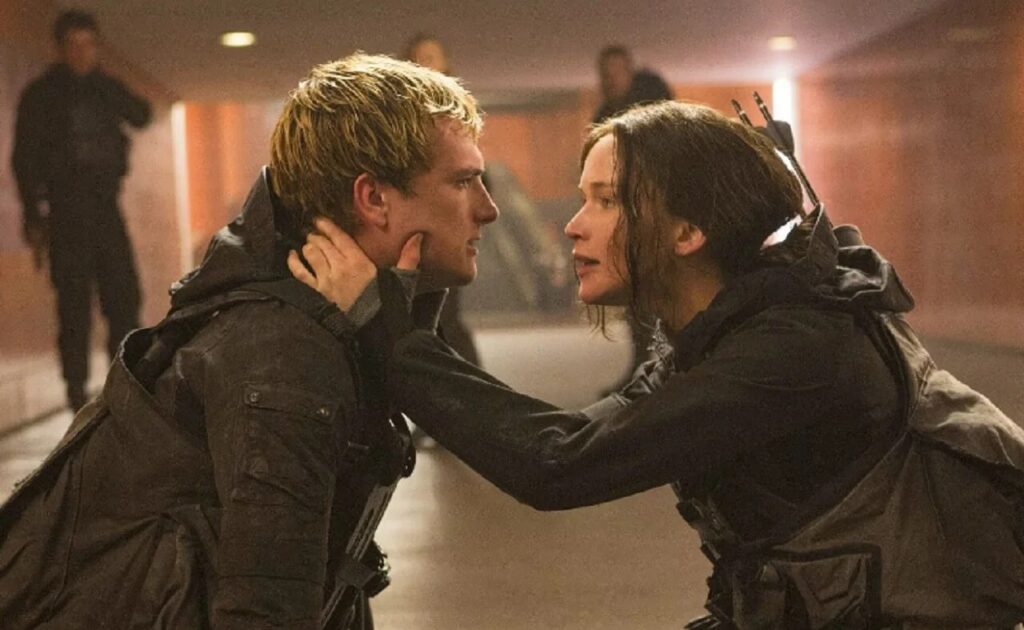
What makes Tarantino’s comments particularly interesting is their context. He wasn’t simply launching a critique in a vacuum; he was discussing his personal cinematic influences and ranking his top films of the 21st century. Battle Royale has long held a place of honor for him, frequently appearing at the top of his favorites list. The film’s raw violence, bold political commentary, and fearless storytelling fit perfectly within Tarantino’s aesthetic, so it’s not surprising that he feels protective of it. When he sees echoes of Takami’s world in Collins’ trilogy, he interprets them as a sign that an underappreciated masterpiece didn’t get the credit it deserved.
There’s also the matter of Tarantino’s broader philosophy on artistic integrity. Throughout his career, he has openly acknowledged his own influences, never hiding the movies, genres, or directors that shaped his work. He has built entire films as homages to the grindhouse flicks, spaghetti westerns, and martial-arts epics he loved growing up. For him, influence is something to celebrate, not conceal. So when he perceives that another creator may have drawn inspiration from existing work without openly discussing it, he reacts strongly. His critique of The Hunger Games might be harsh, but it’s consistent with how he views the creative process.
The debate over originality in storytelling is as old as storytelling itself. Every artist draws from what came before, consciously or unconsciously. Dystopian literature thrives on cycles of reinvention—each generation’s fears shape its narratives about oppressive governments, survival, rebellion, and societal collapse. In many ways, The Hunger Games became the defining dystopian story for its era not because it was the first of its kind, but because it captured a moment in time when audiences were hungry for tales of resistance and empowerment. Meanwhile, Battle Royale emerged from a very different cultural landscape, shaped by Japan’s anxieties around youth violence, economic uncertainty, and authoritarian control.
These shared themes raise important questions about where inspiration ends and imitation begins. Some readers argue that the two works are distinct enough to stand independently; others believe the similarities are too substantial to dismiss. Tarantino’s voice brings new attention to a debate that had simmered down in recent years, but his critique is also part of a bigger conversation about how Western audiences consume global storytelling. Would The Hunger Games have been viewed differently if more Americans had been familiar with Battle Royale at the time? Would Collins have faced tougher scrutiny? Or would both works have been appreciated for contributing their own perspectives to a rich genre?
What’s undeniable is that both stories have left a massive impact on modern pop culture. Battle Royale, once considered too extreme for mainstream Hollywood, has gained a cult following and influenced a generation of creators, from filmmakers to game designers. Its dark, unflinching portrayal of teenagers forced into violence remains a touchstone for discussions about censorship and the limits of genre storytelling. The Hunger Games, meanwhile, became a worldwide juggernaut, spawning films, makeup lines, theme-park attractions, and academic analyses. It introduced younger audiences to dystopian themes in a way that felt accessible, emotional, and rooted in character-driven narrative.
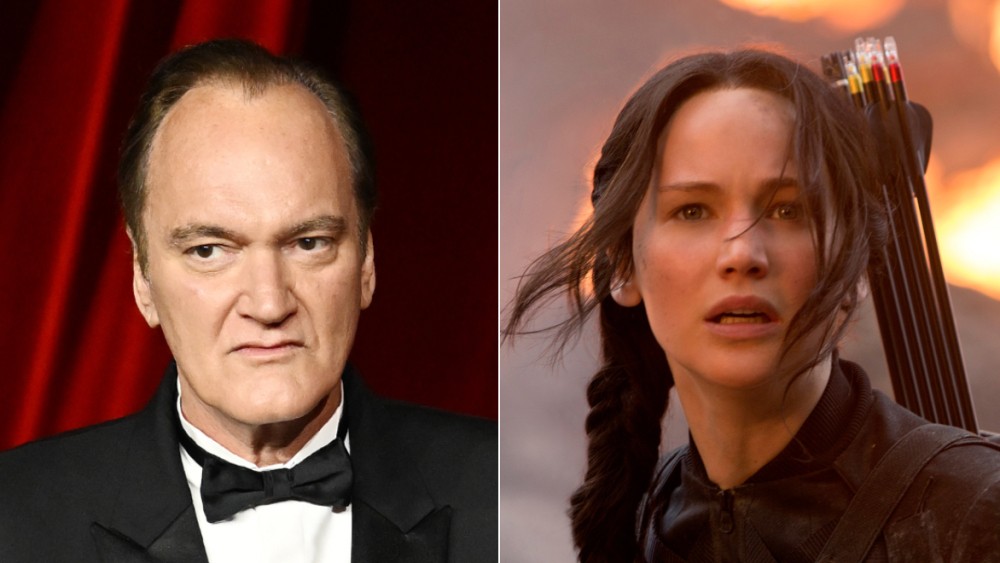
Even as fans reignite debates spurred by Tarantino’s comments, it’s worth noting how rare it is for two stories in the same genre to achieve this level of longevity. Whether one believes The Hunger Games borrowed from Battle Royale or simply existed alongside it, both works have carved their own place in cultural history. Tarantino’s fiery critique may stir the pot, but it also ensures that audiences who missed Battle Royale the first time around may seek it out now. And for the creators involved, perhaps there’s no greater compliment than to have their stories discussed two decades later with this level of passion.
For now, Tarantino’s comments serve as a reminder of his role as both filmmaker and fan. He speaks not just as a director, but as someone who deeply loves cinema and wants the stories that shaped him to be recognized. His outburst may spark controversy, but it also reflects a genuine desire for audiences to look beyond the borders of their own media landscape. Whether people agree or disagree, they’re talking—and that, in the world of storytelling, is often the spark that keeps a narrative alive.