
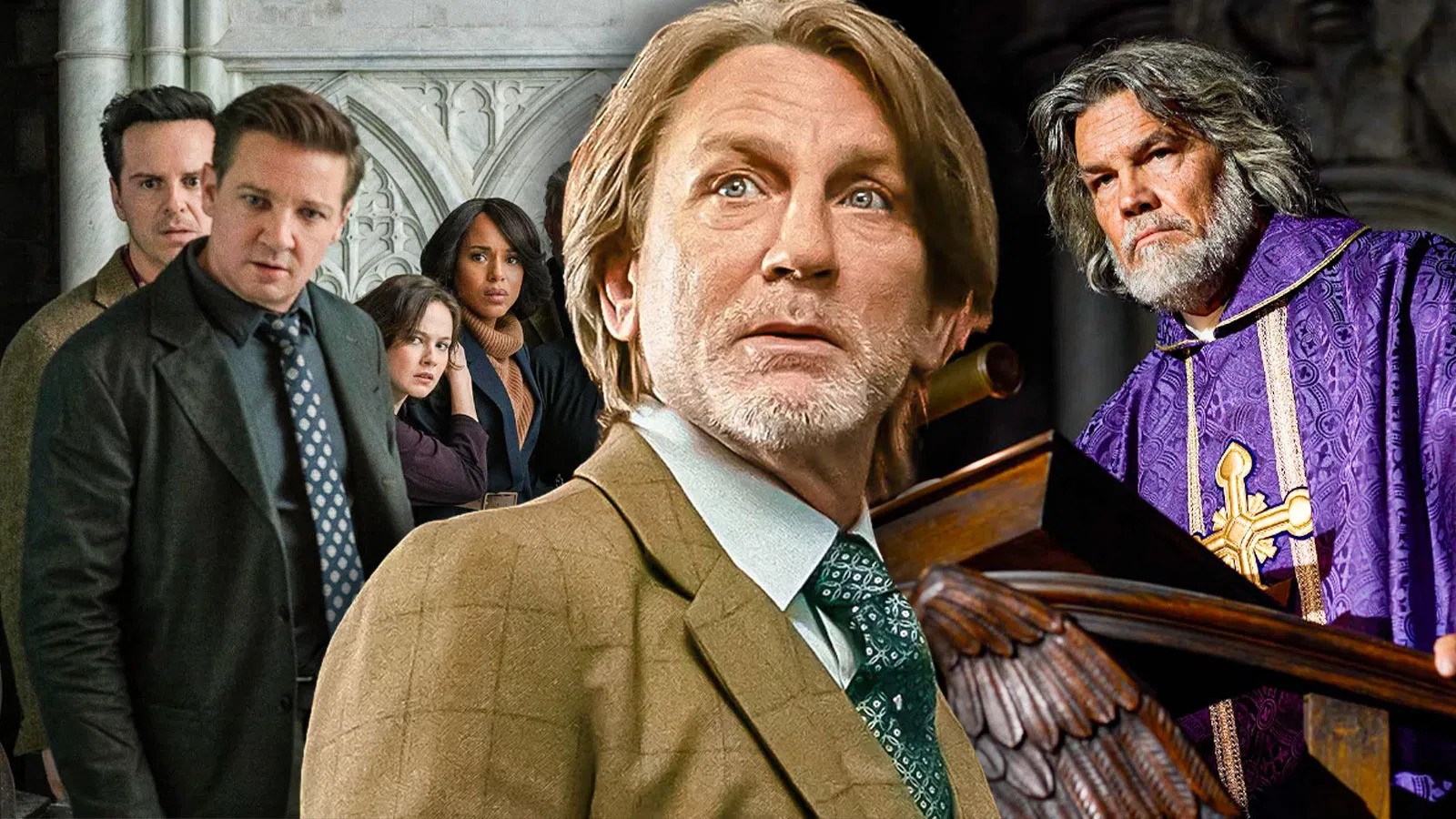
Daniel Craig slips effortlessly back into the crisp linen suits and languid Southern drawl of Benoit Blanc in the third Knives Out installment, Wake Up Dead Man. But as audiences prepare for another twisty Rian Johnson mystery packed with star power and razor-sharp dialogue, Craig wants one thing made clear: Blanc himself will remain at least partly in the shadows. “It’s important that the detective remains a mystery,” he says—a philosophy that, in many ways, defines how Johnson constructs the entire universe around the eccentric sleuth.
The film, arriving in theaters on November 26 and streaming on Netflix starting December 12, drops Blanc into his most spiritually charged case yet. This time, he’s not investigating a billionaire’s island getaway or a wealthy family’s inheritance feud. Instead, he’s drawn into the inner circle of a complicated religious community after a beloved young priest, Father Jud, finds himself accused of murdering his fearsome superior, Monsignor Wicks. Josh O’Connor plays Jud with a quiet, earnest warmth, while Josh Brolin unleashes a fire-and-brimstone façade as Wicks, a man whose tyrannical influence over his followers creates a powder keg of resentment, fear, and fervent loyalty.
As always, Johnson populates Blanc’s world with an ensemble cast that feels both unpredictable and perfectly aligned with the story’s tone. Glenn Close, Jeremy Renner, Kerry Washington, and Andrew Scott round out the group of characters orbiting the late Monsignor, each of them connected to the religious community in ways that blur the lines between devotion, manipulation, and survival. Their intertwined motives, personal grudges, and secrets form the scaffolding of the mystery—but the film’s most unexpected center of gravity lies in Blanc himself.
For all the times Blanc has meticulously unraveled the moral corruptions of others, very little of his own internal world has ever been laid bare. Across three films, Rian Johnson has fed audiences breadcrumbs: the elegant husband waiting at home, played briefly but fondly by Hugh Grant in Glass Onion; hints of Blanc’s past cases, like the offhand reference to the Kentucky Derby mystery in this new film; the charming quirks and intellectual habits that make him at once theatrical and methodical. But the heart of who he is, and where he comes from, has stayed tucked safely behind Craig’s enigmatic performance.
In Wake Up Dead Man, Johnson gives audiences their most intimate look yet at Blanc—not as a detective solving a crime, but as a man wrestling with something far more personal. Early in the film, there’s a deeply felt conversation between Blanc and Father Jud, one that crackles not with tension but with unspoken vulnerability. Blanc calls himself a “proud heretic,” declaring that he “kneels at the altar of the rational.” He openly confesses discomfort with the Church, describing it as “built upon the empty promise of a child’s fairy tale filled with malevolence and misogyny and homophobia,” a condemnation rooted not merely in cynicism but personal history. He mentions his mother’s intense religiosity, hinting at wounds that the detective, for all his skill at dissecting human nature, has never fully confronted in himself.
The conversation isn’t framed as a debate, nor is it intended to convert one man to another’s worldview. Instead, it becomes a rare moment where Blanc stops performing—no grand monologues, no theatrical deductions—and speaks from a place of raw honesty. Jud responds not defensively or dogmatically, but with gentle acknowledgment. “Christianity is storytelling,” he says with a small smile. “The question is, do these stories convince us of a lie? Or do they resonate with something deep inside us that’s profoundly true?” His response stirs something in Blanc, enough for the detective to simply murmur, “Touché, padre,” with uncharacteristic softness.
Daniel Craig says this moment “rocks” Blanc in a way no case ever has. It’s not about shaking his atheism or changing his belief system—it’s about forcing Blanc to confront emotional terrain he’s avoided for years. This isn’t a typical “come to Jesus” narrative, nor is it meant to position Jud as a spiritual guide. Instead, their dynamic becomes about connection, trust, and the willingness to reconsider long-held assumptions about oneself. Craig emphasizes that Blanc is confident, even opinionated, but not arrogant; he knows who he is. Yet Jud, simply by being open and compassionate, nudges Blanc to examine corners of himself that he usually keeps locked away.
Rian Johnson admits that the scene was born from his own complicated relationship with religion. “I grew up very Christian,” he says. “It was something that was a deeply important part of my identity, and I’m not anymore.” Exploring that internal conflict in a franchise known for flashy twists, comedic flair, and social satire was risky—but, for Johnson, irresistible. The challenge wasn’t simply to fit a philosophical moment into a murder mystery; it was to do so without breaking the tone or momentum that fans expect from a Knives Out film.
What makes the scene resonate is how natural it feels. Johnson doesn’t turn Wake Up Dead Man into a meditation on faith, nor does he push an agenda. Instead, he uses the murder mystery format—where truth, belief, and deception constantly blur—to make space for a conversation about the stories people tell themselves. Stories that comfort, stories that harm, stories that justify cruelty, and stories that help people survive. It’s thematically aligned with the genre while still being deeply human.
Despite this window into Blanc’s personal beliefs, the film still keeps him largely opaque. Beyond these scattered bits of characterization, audiences remain in the dark about Blanc’s childhood, his early years as a detective, or the origins of his famous investigative instincts. The mention of the Kentucky Derby case—a tantalizing anecdote offered almost like an inside joke—only deepens the mystery. Craig says that’s intentional. The detective should provoke curiosity, he argues, not give everything away. The enigma is part of the entertainment: “There should be questions,” he says, “but then the whole movie should be questions.”
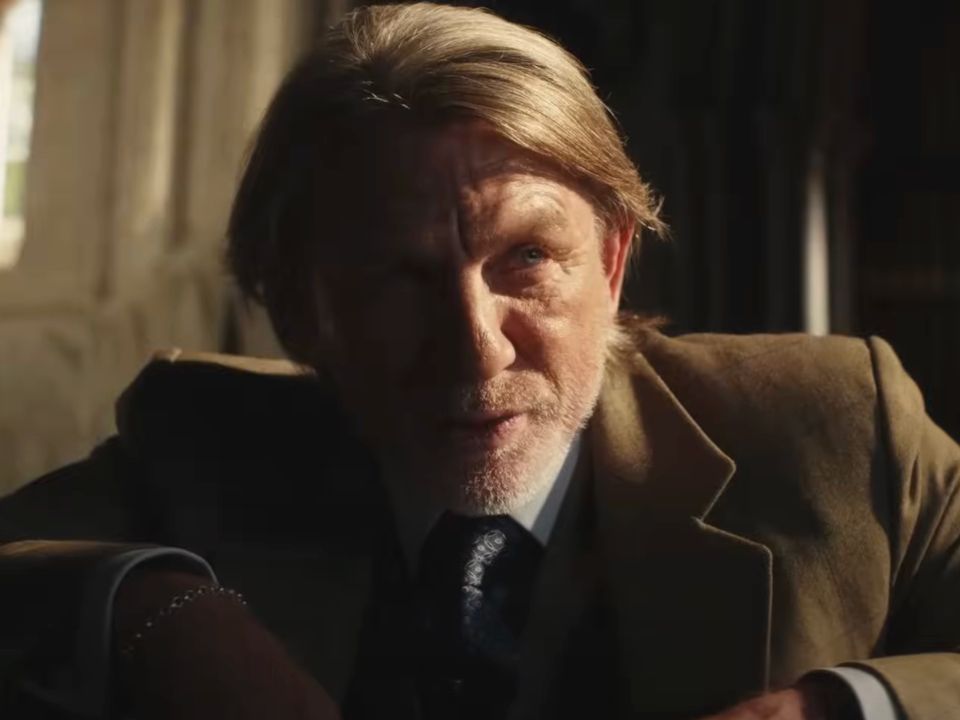
Johnson agrees, explaining that many of fiction’s most beloved detectives remain largely unknowable. Hercule Poirot, Miss Marple, Columbo—they all arrive in their respective stories almost fully formed, stepping into mysteries with a God-like clarity and then disappearing just as easily. They are, in Johnson’s words, figures who “descend from the heavens into the story,” existing slightly outside the reality of the characters they investigate. Their very detachment makes them compelling. If audiences understood every detail of their lives, that magical distance would disappear.
Yet Johnson, ever mischievous, can’t resist teasing his own potential to subvert this tradition. As soon as he defends the detective’s need for mystery, he jokes that saying it out loud makes him want to break that rule in a future installment. He’s built a character whose appeal comes from the balance of theatrical predictability and personal opacity—but in the hands of a writer who loves surprising his audience, nothing is ever truly off the table.
Wake Up Dead Man promises everything fans love about Knives Out: an irresistible cast, a complex puzzle, biting humor, and Benoit Blanc’s delightful monologues delivered with a syrupy drawl. But beneath the surface lies a story that allows Blanc to be more than just a brilliant detective. He becomes a man shaped by childhood beliefs, haunted by institutional hypocrisy, and unexpectedly moved by the kindness of someone he’s supposed to be helping. It’s the closest Johnson has ever come to revealing Blanc’s heart.
Even so, questions remain—and that’s the point. Where did Blanc come from? What shaped him beyond his mother’s faith? What happened at the Kentucky Derby? What led him to his husband, and what is their life like beyond Blanc’s eccentric cases? Audiences may crave answers, but Craig and Johnson understand that holding those shadows close is what keeps Benoit Blanc compelling.
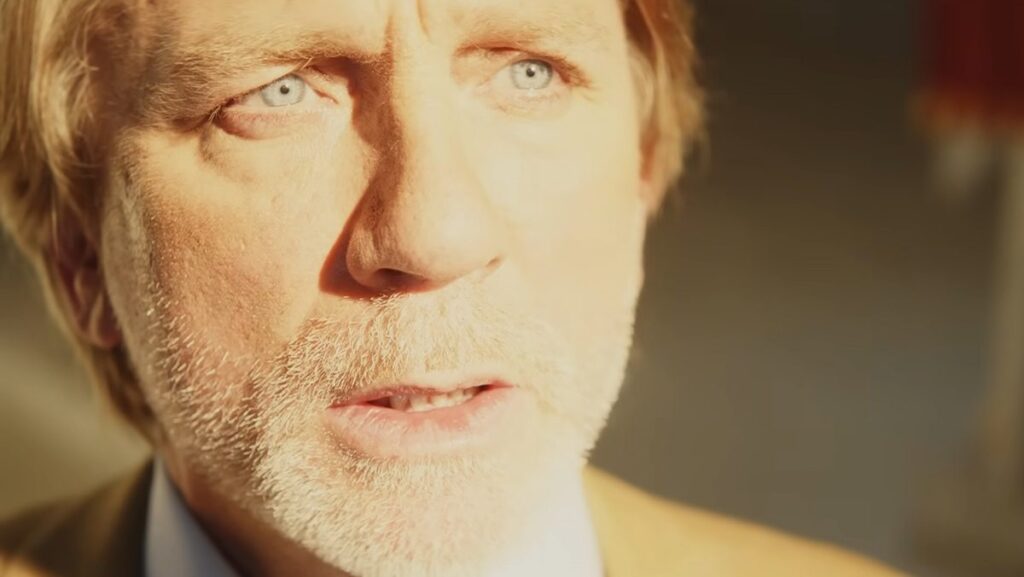
With each film, Blanc solves the mystery at hand. But he remains, himself, a beautifully crafted puzzle—a man of elegance, intuition, contradiction, and guarded emotion. And as long as Rian Johnson keeps Benoit Blanc at the center of his cinematic labyrinths, audiences will keep returning not just for the murders, but for the promise that one day, piece by piece, Blanc might allow just a little more of himself to slip into the light—before retreating again into that enigmatic Southern charm that makes him unforgettable.